







































h1 style="text-align: center;">
What is the Difference Between Single and Dual-Pocket Currency Discriminators?
| Enhance Your Cash Management Efficiency |
|---|
| Currency counters not only speed up your cash handling but also help identify issues before they become costly. In this article, we break down how single and dual-pocket currency discriminators differ so you can choose the ideal machine for your business needs. |
Understanding Single-Pocket Currency Counters
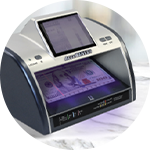
A single-pocket currency counter provides a simple, efficient method for counting bills rapidly. Once you load a stack of bills, the machine begins counting at high speeds until it encounters an issue – such as a mismatched denomination, suspected counterfeit, or a damaged note.
Key Features:
| • Counting: Begins counting bills immediately upon loading at speeds that vary by brand. |
| • Issue Detection: Stops immediately upon detecting a bill anomaly like a different denomination, counterfeit markings, or damage. |
| • Sorting Limitations: Lacks the capability to separate mixed denominations, requiring manual pre-sorting if needed. |
Ideal Use Cases for Single-Pocket Counters
Best for businesses that primarily deal with one denomination at a time, such as small retail outlets, cafes, and local shops where quick and accurate counting is key.
The Advantages of Dual-Pocket Currency Counters
For environments where large cash volumes and mixed denominations are the norm, dual-pocket counters provide significant operational advantages.
Key Advantages:
| • Dual Output Pockets: The machine continues counting by diverting problematic bills to a secondary pocket instead of stopping. |  |
| • Efficient Sorting and Detection: Automatically separates bills by denomination and flags counterfeits, ensuring continuous operation without manual intervention. | |
Ideal Use Cases for Dual-Pocket Counters
Suited for high-traffic cash environments such as banks, casinos, and busy retail stores where both speed and accuracy in mixed cash management are essential.
Single vs. Dual-Pocket: Which Is Right for You?
Choose a single-pocket counter if your operations mainly involve one denomination at a time and you require a simple, budget-friendly solution. If your business processes high cash volumes with varied denominations and benefits from uninterrupted counting with automated sorting, a dual-pocket counter is the superior choice.
Make your choice based on your cash-handling needs, and enhance your overall operational efficiency.